
SEO Glossary: SEO Content

The title tag is the line of code that gives each page its name in search results and in the browser tab. It is usually the first thing a searcher reads about your business, so a few well chosen words can change how many people click.
What a title tag is
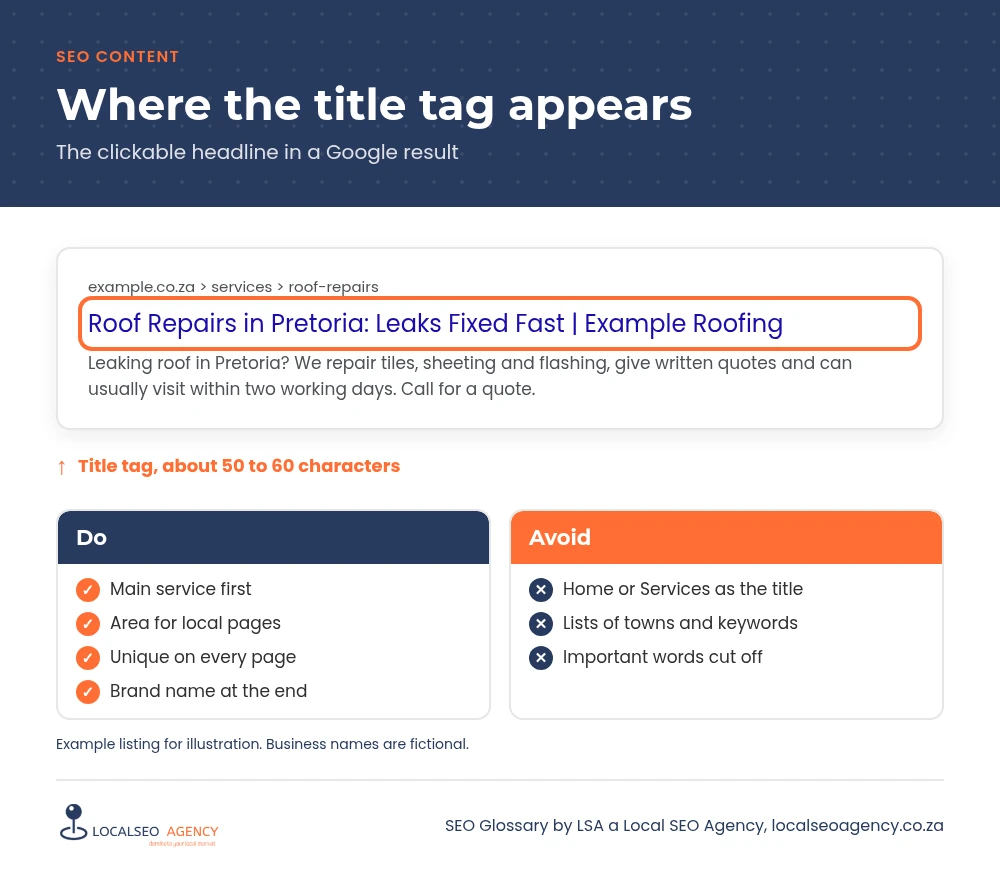
The title tag sits in the head section of the page's HTML as a title element. Google uses it as the main source for the blue, clickable headline in search results, and browsers show it in the tab. In WordPress, your SEO plugin usually lets you set it per page in a field called the SEO title.
It is separate from the heading on the page. The H1 is what visitors see at the top of the page itself. The two can be similar, but the title tag is written for the results page, where your listing sits between competitors.
Why it matters
The title is one of the clearest signals of what a page is about, and it strongly influences whether someone clicks. A vague title such as Home or Services wastes both chances. A specific title that names the service, the area and a reason to choose you gives Google context and gives searchers a reason to pick your result.
Google does sometimes rewrite titles it considers unclear, too long or stuffed with keywords. Writing a clean, accurate title in the first place makes it far more likely that your version is shown.
How to write a good title tag
Lead with the main topic
Put the service or subject first, since the start of the title is what people read and what is least likely to be cut off.
Keep it to a sensible length
Google truncates titles by pixel width, which usually works out at around 50 to 60 characters. Longer titles end with an ellipsis on many screens.
Add the area or a benefit
For local pages, include the city. For guides, a short benefit such as a plain English guide can help.
Finish with the brand
A short brand name at the end builds recognition without crowding out the topic.
Common title tag mistakes
- The same title on many pages, often just the business name.
- Titles stuffed with lists of towns or repeated keywords.
- Long titles where the important words are cut off.
- Titles that promise something the page does not deliver.
- Leaving the default title generated by the theme or page builder.
How to check your titles
Crawl your site with a free SEO tool or check your SEO plugin's overview to list every title. Look for duplicates, missing titles and very long ones. Then search for your main pages in Google and read your listings as a customer would. Pair each title with a strong meta description, since the two appear together.
When you change titles on important pages, note the date and compare clicks in Search Console a month later. Small wording changes can make a measurable difference.
How LSA helps
LSA a Local SEO Agency rewrites title tags across your site so each page has a unique, specific headline that fits on screen. It is a standard part of our on page SEO services.
For the short definition, see Title Tag in our SEO Glossary, alongside the other SEO content terms.
Need this written or rewritten properly? Call LSA a Local SEO Agency on 068 786 7331 or contact us today.