

You have invested time and budget into SEO, but how do you know if it is actually working? Many South African small business owners struggle to measure their SEO success clearly, leaving them uncertain whether their efforts are driving real results. Tracking SEO progress is crucial for optimising online visibility and lead generation, yet most SMEs lack a simple framework to do so. This guide provides practical steps and metrics tailored for South African small businesses, helping you transform abstract SEO goals into measurable, actionable data that drives growth.
Table of Contents
- Understanding SEO Benchmarks And Why They Matter
- Preparing To Track Your SEO Progress: Tools And Prerequisites
- Executing Effective SEO Tracking: Metrics And Methods
- Troubleshooting Common SEO Tracking Mistakes And Pitfalls
- Verifying SEO Success: What Results To Expect And When
- Boost Your SEO Tracking With Expert Help From LSA SEO Agency
- Frequently Asked Questions
Key takeaways
| Point | Details |
|---|---|
| Identify key SEO benchmarks | Track organic traffic, keyword rankings, conversions, and local visibility to measure progress effectively |
| Use specific tools and metrics | Google Analytics, Search Console, and local SEO tools provide actionable data suited for small businesses |
| Compare results with benchmarks regularly | Monthly reviews of performance data drive better decisions and optimize resource allocation |
| Avoid common SEO pitfalls | Steer clear of vanity metrics and ineffective backlink schemes to maximize budget impact |
Understanding SEO benchmarks and why they matter
SEO benchmarks are critical metrics that track your website’s performance over time. They transform abstract goals like “improve online visibility” into measurable data points you can analyse and act upon. For small businesses in South Africa, SEO benchmarks provide a clear picture of a website’s performance over time, transforming abstract goals into measurable progress, making them essential for data-driven decisions.
Without benchmarks, you are essentially hoping your SEO efforts work rather than knowing they do. Benchmarks help you visualize three critical points: where you started, where you are now, and where you want to go. This clarity is particularly valuable for resource optimization, a priority for South African SMEs working with limited budgets.
Consider benchmarks as your SEO roadmap. They reveal which strategies deliver results and which drain resources without returns. For example, tracking organic traffic growth month over month shows whether your content strategy attracts more visitors. Monitoring keyword rankings tells you if your target audience can find you when searching for relevant services.
Benchmarks also enable meaningful competitive analysis for seo, helping you understand how your performance stacks up against local competitors. This insight guides strategic adjustments, ensuring every rand spent on SEO works harder for your business.
SEO benchmarks provide a clear picture of a website’s performance over time, transforming abstract goals into measurable progress.
Key benchmark categories include:
- Organic traffic volume and quality
- Keyword ranking positions for target terms
- Conversion rates from organic visitors
- Local search visibility and map pack appearances
- Backlink profile growth and quality
Preparing to track your SEO progress: tools and prerequisites
Before you can effectively track SEO metrics, you need the right tools and a clear baseline. Start by selecting SEO tools suited for small businesses that balance functionality with affordability. Google Analytics and Google Search Console are free, powerful options that provide essential data on traffic, user behavior, and search performance.
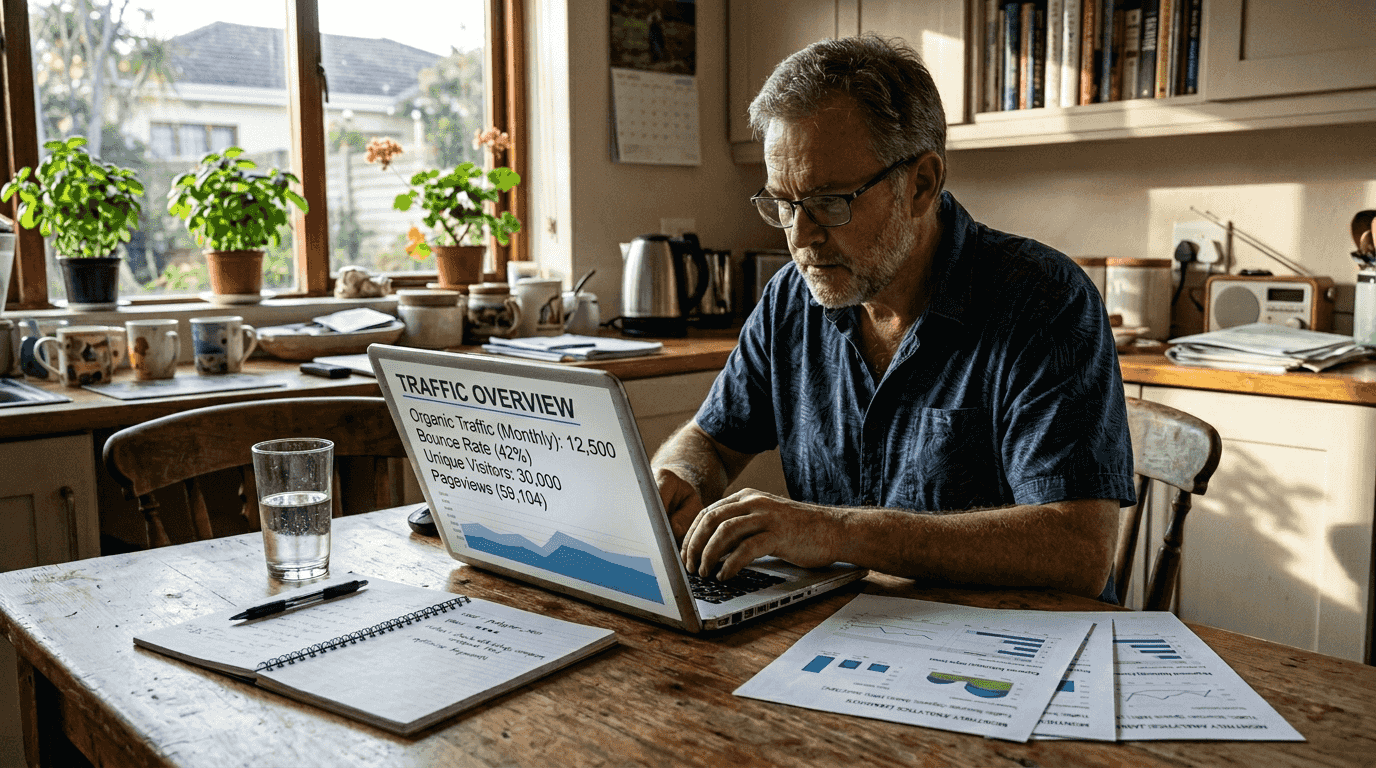
Setting initial benchmarks is crucial. Record your current organic traffic, keyword rankings, lead generation numbers, and local search visibility. These baseline metrics become your reference points for measuring future progress. Without knowing where you started, you cannot accurately measure improvement.
Pro Tip: Align your tracking with specific business goals rather than generic metrics. If lead generation matters most, prioritize tracking conversions and qualified traffic over total sessions.
The table below compares popular SEO tools by features relevant to South African SMEs:
| Tool | Best For | Cost | Key Features |
|---|---|---|---|
| Google Analytics | Traffic analysis | Free | User behavior, conversion tracking, audience insights |
| Google Search Console | Search performance | Free | Keyword data, indexing status, technical issues |
| SEMrush | Comprehensive tracking | Paid | Keyword research, competitor analysis, site audits |
| Ahrefs | Backlink analysis | Paid | Link building, content gaps, rank tracking |
| Moz Local | Local SEO | Paid | Citation management, local rankings, reputation monitoring |
Essential prerequisites for effective tracking include:
- Verified Google Analytics and Search Console accounts
- Clear business objectives tied to measurable KPIs
- Documented baseline metrics across all key performance areas
- Regular reporting schedule established (monthly recommended)
Small businesses need to make every SEO effort count, and benchmarks are vital for strategic planning, growth tracking, competitive analysis, and resource optimization. Proper preparation ensures you can identify what works and eliminate what wastes budget.
Invest time exploring seo optimization tools and local seo tools to find solutions matching your specific business needs and technical comfort level.
Executing effective SEO tracking: metrics and methods
Once prepared, implement systematic tracking of essential SEO metrics. The most critical metrics for South African small businesses include organic traffic volume, keyword rankings, lead conversions, and local search performance. These metrics directly correlate with business growth and revenue generation.
Follow this stepwise tracking method:
- Set up tracking dashboards in Google Analytics and Search Console
- Configure conversion goals aligned with business objectives
- Monitor metrics weekly, analyse trends monthly
- Document insights and adjust strategy based on data
- Compare current performance against baseline benchmarks
The table below summarizes key metrics, what they measure, and tracking methods:
| Metric | What It Measures | How to Track |
| — | — | — | — |
| Organic Traffic | Visitors from search engines | Google Analytics (Acquisition > Organic Search) |
| Keyword Rankings | Position for target search terms | Search Console, rank tracking tools |
| Conversion Rate | Percentage of visitors completing goals | Google Analytics (Goals, Conversions) |
| Local Visibility | Map pack and local search appearances | Google Business Profile insights, local rank trackers |
| Bounce Rate | Percentage leaving after one page | Google Analytics (Behavior metrics) |
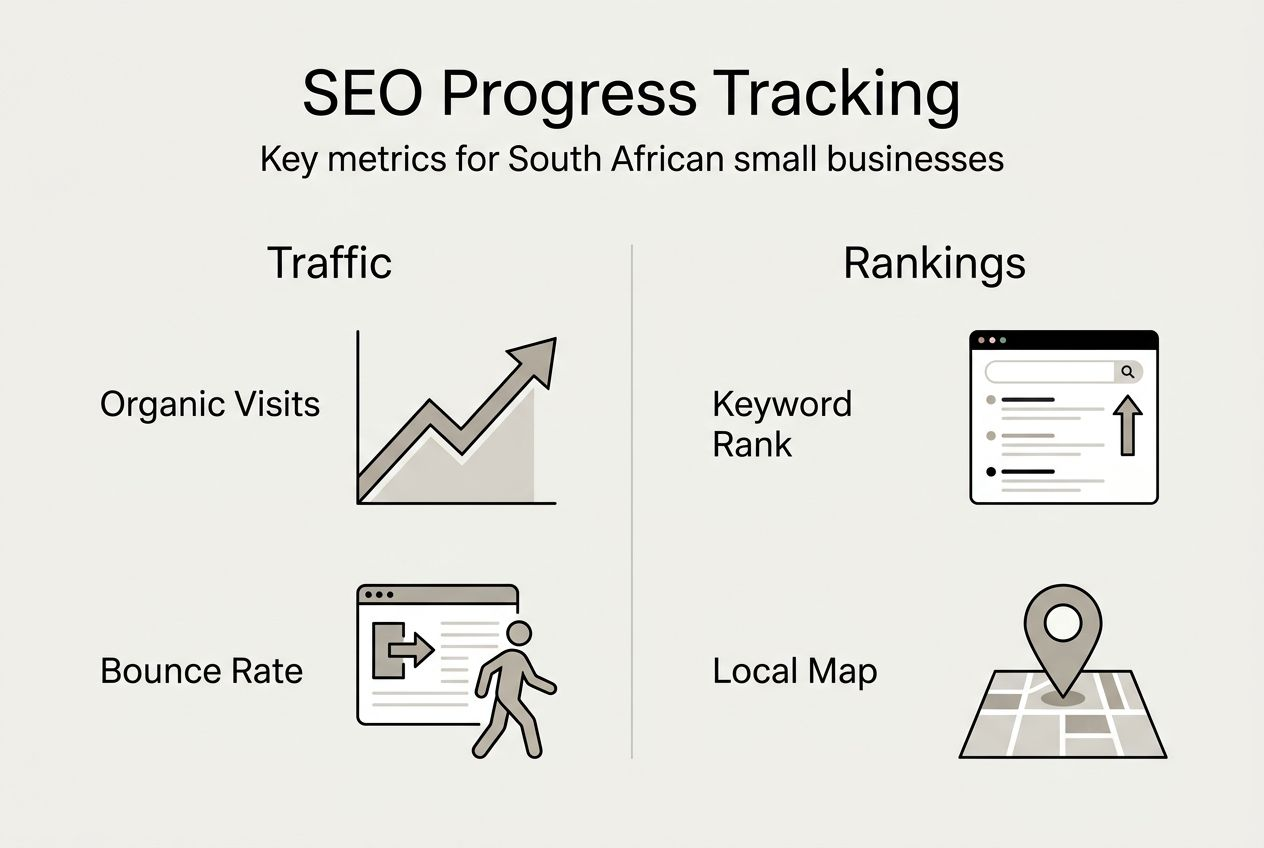
Understanding traffic quality matters as much as quantity. Organic search drives 53% of all website traffic, making it a primary channel for customer acquisition. Focus on attracting qualified visitors likely to convert rather than chasing vanity traffic numbers.
Conversion tracking reveals SEO’s true business impact. SEO leads convert at significantly higher rates than outbound leads, with close rates 5 to 8 times higher for inbound organic traffic. This data justifies continued SEO investment and helps calculate return on investment.
Local SEO metrics particularly important for South African businesses include:
- Google Business Profile views and actions
- Map pack ranking positions
- Direction requests and phone calls
- Local citation consistency
- Reviews quantity and rating average
Pro Tip: Integrate Google Business Profile insights into your monthly tracking routine for rapid ROI visibility, as local optimization often delivers faster results than broader SEO efforts.
Regular monitoring through local seo optimization practices ensures you catch issues early and capitalize on opportunities quickly. Leverage local seo for small businesses strategies to maximize visibility in your service area.
Consistent competitive analysis for seo helps you understand market positioning and identify gaps competitors have not yet filled.
Troubleshooting common SEO tracking mistakes and pitfalls
Even with good intentions, small businesses frequently make tracking errors that skew data and waste resources. Recognizing these pitfalls helps you avoid costly mistakes and maintain accurate performance measurement.
Common tracking errors include:
- Focusing exclusively on rankings while ignoring conversion quality
- Neglecting local SEO metrics despite serving a geographic area
- Relying on paid link schemes that violate search engine guidelines
- Tracking too many metrics without prioritizing business critical KPIs
- Inconsistent measurement periods that prevent accurate trend analysis
- Misattributing traffic sources due to improper UTM tagging
Budget waste represents a significant concern for resource constrained SMEs. The data reveals a troubling reality:
Small businesses waste 38% of their SEO budget on ineffective backlink schemes.
This statistic from SEO strategy for small business research highlights why quality tracking matters. When you monitor the right metrics, you quickly identify which tactics deliver results and which drain resources without returns.
Avoid these specific budget traps:
- Purchasing bulk backlinks from low quality directories
- Investing in keyword stuffing content that ranks poorly
- Paying for traffic that does not match your target audience
- Neglecting mobile optimization despite mobile first indexing
- Ignoring technical SEO issues that block search engine crawling
Maintaining consistent, quality tracking practices protects your investment. Establish a regular review schedule, document methodology changes, and validate data accuracy periodically. When metrics seem unusual, investigate potential tracking errors before making strategy changes.
Learn from common local seo mistakes to avoid repeating errors that have already cost other businesses time and money.
Verifying SEO success: what results to expect and when
Understanding realistic SEO timelines prevents premature strategy abandonment and helps you evaluate whether your efforts are on track. SEO is not an overnight solution, but different tactics deliver results at varying speeds.
Google Business Profile optimization represents the fastest path to ROI for local businesses. Google Business Profile optimization shows ROI in 30 to 90 days, while full SEO strategies break even at 5 to 7 months. This timeline difference explains why many experts recommend prioritizing local optimization first.
Expected conversion improvements when focusing on local SEO include:
- Higher quality leads from geographically relevant searches
- Increased phone calls and direction requests
- Better conversion rates due to local intent matching
- Stronger trust signals from reviews and local presence
The data strongly supports local focus for small businesses: Small business SEO delivers 3 to 5 times higher conversion rates than national campaigns when you prioritize local optimization first. This conversion advantage translates directly to revenue impact.
Realistic expectations by timeframe:
- 30 to 90 days: Google Business Profile traffic and engagement increases
- 3 to 4 months: Improved rankings for low competition local keywords
- 5 to 7 months: Full SEO strategy reaching break even point
- 8 to 12 months: Compound growth from content authority and backlinks
- 12+ months: Sustainable organic traffic growth and market leadership
Ongoing measurement and adjustment based on results remains critical throughout your SEO journey. Markets shift, competitors adapt, and search algorithms evolve. Regular tracking ensures you stay responsive to these changes.
Partner with local seo services providers who understand South African market dynamics and can accelerate your path to measurable results.
Boost your SEO tracking with expert help from LSA SEO Agency
Tracking SEO progress effectively requires expertise, tools, and consistent effort. LSA SEO Agency specializes in helping South African small businesses measure and optimize their SEO performance with precision. Our team understands the unique challenges facing local SMEs and delivers tailored solutions that maximize your marketing budget.
We provide comprehensive tracking dashboards, monthly performance reports, and strategic recommendations based on your specific business goals. Our best seo optimization service packages include everything from initial benchmark establishment to ongoing monitoring and optimization.
Whether you need help setting up tracking systems or want professionals managing your entire SEO strategy, our local seo services deliver measurable results. Explore our seo packages south africa designed specifically for small business budgets and growth objectives. Contact us today to transform your SEO tracking from guesswork into a strategic growth engine.
Frequently asked questions
What are the key metrics I should track to measure SEO progress?
Organic traffic, keyword rankings, conversions, and local search visibility are essential metrics to track. Focus on metrics tied to qualified leads rather than just sessions, as traffic quality matters more than quantity for business growth. Monitor conversion rates and lead generation numbers to understand SEO’s true business impact.
How often should I review my SEO progress and benchmarks?
Review SEO metrics monthly to react promptly to changes and identify trends early. Monthly reviews provide enough data to spot patterns without overwhelming you with daily fluctuations. Regular reviews help optimize resource allocation and enable timely strategy adjustments based on performance data.
What common mistakes should I avoid when tracking SEO progress?
Avoid focusing solely on vanity metrics like impressions without conversions, as they do not reflect business value. Beware of investing in ineffective backlink schemes that waste 38% of small business SEO budgets. Maintain consistency in measurement periods and use reliable tools for accurate data collection.
How soon can I expect to see results from SEO efforts?
Google Business Profile optimization can show ROI within 30 to 90 days for local businesses. Full SEO strategies typically break even around 5 to 7 months after consistent effort, with compound growth accelerating beyond the first year. Local optimization delivers 3 to 5 times higher conversion rates than national campaigns, making it the fastest path to results for small businesses.
Recommended
- Technical SEO for South African small businesses in 2026
- SEO fundamentals explained: boost your SA business in 2026
- Optimize websites for South African businesses 2026
- Unlock Growth with Top SEO Services in South Africa – LSA SEO Agency
- Local search optimization: boost UK business visibility
- 6 Advanced SEO Company Tactics for Amazon Sellers – Searchoneers