
SEO Guides: Link Building
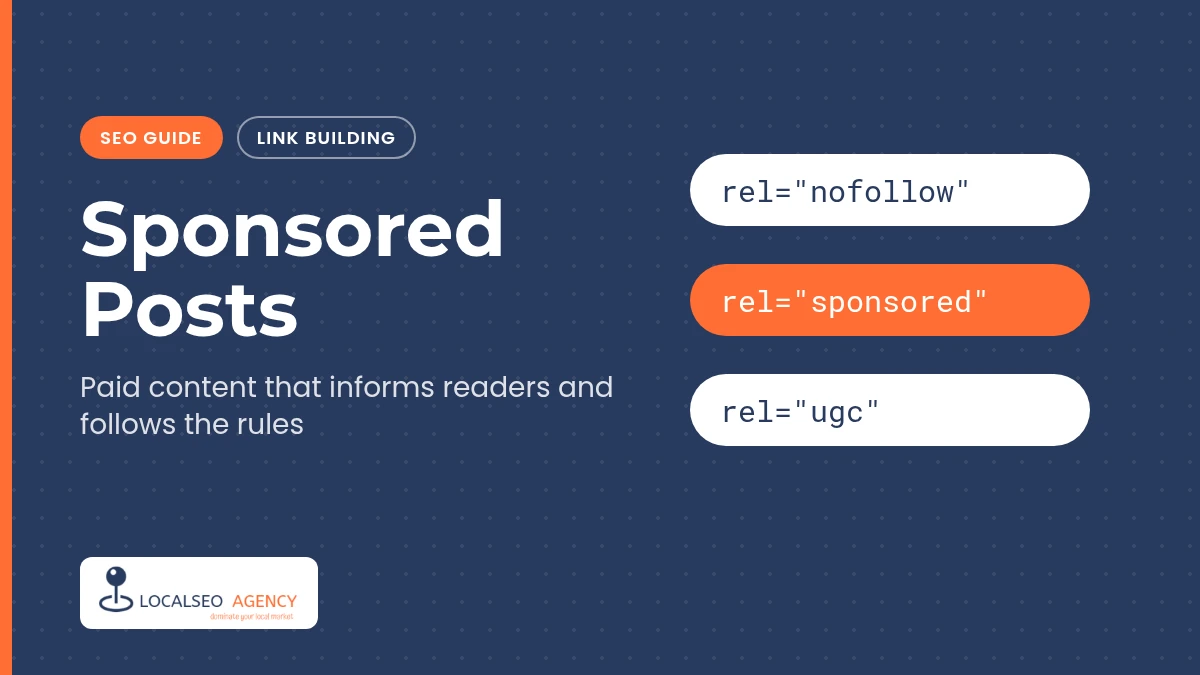
A sponsored post is an article a business pays a publisher to run, usually about its products, its expertise or an event. Done properly it is honest advertising that reaches a real audience. Done carelessly it becomes a bought link that breaks Google's rules and misleads readers. This guide explains how South African businesses can use sponsored content well, label it correctly and judge whether it is worth the money.
What a sponsored post is
Publishers of every size sell space for paid articles. Magazines call them advertorials, news sites call them partner content or branded content, and bloggers often call them collaborations. The content may be written by the advertiser, by the publisher's own team or jointly, but in every case the business pays for it to appear.
Sponsored posts sit alongside display adverts, newsletter placements and event sponsorships in a marketing budget. Their value comes from the audience they reach, not from any effect on search rankings.
Why businesses use sponsored content
Good sponsored content can do several useful jobs:
- Introduce a new service to readers who already trust the publication.
- Explain a complex product in more depth than an advert allows.
- Support a launch, an event or a seasonal campaign with timely coverage.
- Reach a specific trade, region or community through a niche title.
- Generate referral visits and enquiries that can be tracked.
None of those benefits depends on the link passing ranking credit, which is why labelling it properly costs you very little.

Google's rules on paid links
Paying for exposure is ordinary marketing, and Google has no objection to it. Its spam policies object only when a paid link passes ranking credit, and they name advertorials and native advertising with followed links as an example. The fix is to qualify every link in content you paid for.
In July 2021 Google published a reminder on qualifying links in sponsored and guest content, noting that its systems may take action against sites that sell or buy unqualified links. In practice that means two things: the publisher should label the article as paid, and the links inside it should carry the right attribute.
Using rel="sponsored" correctly
Google introduced the sponsored value in September 2019 and recommends it for adverts, paid placements and sponsorships. The older nofollow value is still accepted for the same purpose. A link can carry both if a publisher prefers, for example rel="sponsored nofollow".
Every paid link needs the attribute, not just the first one in the text. Check the author bio, image links, buttons and any links added later. Our glossary page on link attributes explains the three values.
Disclosing sponsored content to readers
Labelling is about honesty with people as well as search engines. Readers should be able to tell at a glance that a business paid for the article. Clear labels such as Sponsored, Paid partnership or In partnership with are better than vague wording like Featured.
In South Africa, the Advertising Regulatory Board's Code of Advertising Practice applies to publishers and influencers, and its Social Media Code (Appendix K) requires paid content that could pass for personal opinion to carry a clear identifier such as #Ad or #Sponsored. Check the current code, or ask the publisher how they label partner content, before you agree a campaign.
How to judge a sponsored opportunity
Evaluate a paid placement as you would any advert:
Who reads it
Ask for audience figures, location and interests. A regional title with readers in your service area may beat a national site with a vague audience.
Does it fit your brand
The publication's tone, other advertisers and editorial standards reflect on you. Look at what else it publishes.
What will you measure
Agree how you will track results: tagged links in analytics, a unique offer code, a dedicated phone number or enquiry form fields.
What does it cost per result
Compare the fee with what the same budget would buy in search ads, social adverts or event sponsorship.
Red flags in sponsored post offers
Some offers are really link sales dressed as advertising. Be cautious when you see:
- Prices set by an authority score rather than by audience.
- Promises that links will be dofollow or that no label will be added.
- Sites that publish paid posts on any subject for anyone.
- Requests to hide the payment or call it a guest post.
- No data on readers, only on search metrics.
A publisher willing to sell you an unlabelled followed link is selling the same to others, which puts both sites at risk.
Getting value from a sponsored post
Write for the reader first
Treat the piece as content people should want to read. Offer useful advice, a local angle or a real story, not a sales brochure.
Link to the right page
Send readers to a page that continues the conversation, such as a relevant service page or a guide, rather than the home page.
Reuse the coverage
Share the article through your own social channels and newsletter, and mention it on your site where it adds credibility.
Follow up with relationships
A good sponsorship can lead to editorial opportunities later, such as expert comment or a genuine guest article. Those earned links carry ranking value that paid ones do not.
Choosing South African publishers
South Africa has a wide range of places to run sponsored content, each suited to different goals:
Community and regional news
Local titles reach residents in specific towns and suburbs, which suits trades, clinics, schools and retailers with a defined service area.
Trade and industry publications
Titles serving construction, farming, mining or hospitality put you in front of the managers and owners who commission business services.
Lifestyle and niche blogs
Independent writers on food, parenting, travel or outdoor pursuits can reach engaged audiences, provided their readers match your customers.
Association and chamber newsletters
Member bodies often accept sponsored features or adverts and give access to a trusted, local business audience.
Wherever you advertise, ask for recent examples of partner content so you can see how it is labelled and presented.
Budgeting for sponsored content
Prices vary widely by audience, format and season, so there is no standard rate. Set a budget per campaign, decide in advance which result would make the spend worthwhile, and compare each option on cost per visitor or cost per enquiry rather than on the publication's reputation alone. Start small with one or two placements, measure carefully and reinvest in the publishers that perform.
Common mistakes with sponsored posts
- Picking a publication for its metrics while ignoring who actually reads it.
- Agreeing to leave the article unlabelled to make it look editorial.
- Forgetting to qualify links in the author bio or image captions.
- Sending readers to a home page with no clear next step.
- Running a one off placement with no way to measure what it achieved.
Sponsored posts versus earned coverage
Paid content buys reach and control over the message. Earned coverage, through digital PR or expert comment, costs effort rather than a fee and can include followed links chosen freely by an editor. A healthy marketing plan uses both, keeps them clearly separate and never presents one as the other. The link building pillar guide explains how earned links fit into a wider strategy, and the glossary entry on digital PR covers the earned side.
Sponsored content and AI search
Generative search features and AI assistants increasingly summarise information from across the web. Clearly labelled, genuinely helpful partner content on respected publications can still help people discover your brand there, because it adds a trustworthy mention in context. Thin advertorials stuffed with links are far less likely to be cited, so the same principle applies: write something worth reading and label it honestly.
If you sell sponsored posts on your own site
The rules apply in both directions. Businesses that accept paid articles or run affiliate links on their own website should label the content and qualify the links. Selling unqualified followed links can lead Google to distrust the links on your whole site.
Affiliate and influencer arrangements
The same rules cover affiliate programmes and influencer partnerships. If you pay a commission, send free products or offer any other benefit in return for a mention, the resulting links are paid links and should be qualified, and the content should be disclosed as a partnership. Give partners written guidance on labelling so that the responsibility is clear from the start.
Keeping records of paid placements
Maintain a simple log of every sponsored article you buy: the publisher, the date, the page address, what was paid and how links were labelled. Review it every few months to confirm that the pages are still live and the attributes are still in place, since site redesigns sometimes strip them. A clear record also makes any future link audit much quicker.
Questions about sponsored posts
Will a sponsored link help my rankings?
Not in the way a link seller promises. Search engines give labelled paid links no ranking weight, so the return comes from people who click, remember your name and come back.
Is a sponsored post the same as a guest post?
No. A guest post is written for a publication without payment, and the editor decides whether to run it. Paying for a guest post makes it sponsored content, and it should be labelled that way.
What if the publisher refuses to add the attribute?
Then the arrangement breaches Google's policies for both of you. Ask again, choose another publisher or remove the link.
How LSA helps
Planning a paid campaign? LSA a Local SEO Agency can shortlist publications whose readers match your customers, check that labelling is right and audit past campaigns for unqualified paid links. Visit our backlink building page or call us to discuss it.
Ready to build links that last? Call LSA a Local SEO Agency on 068 786 7331 or contact us to talk about a link building plan for your business.