
SEO Glossary: Technical SEO

People can tell at a glance that a page shows a business name, address and opening hours. Structured data spells that out for search engines in a format they read without guessing.
What structured data is
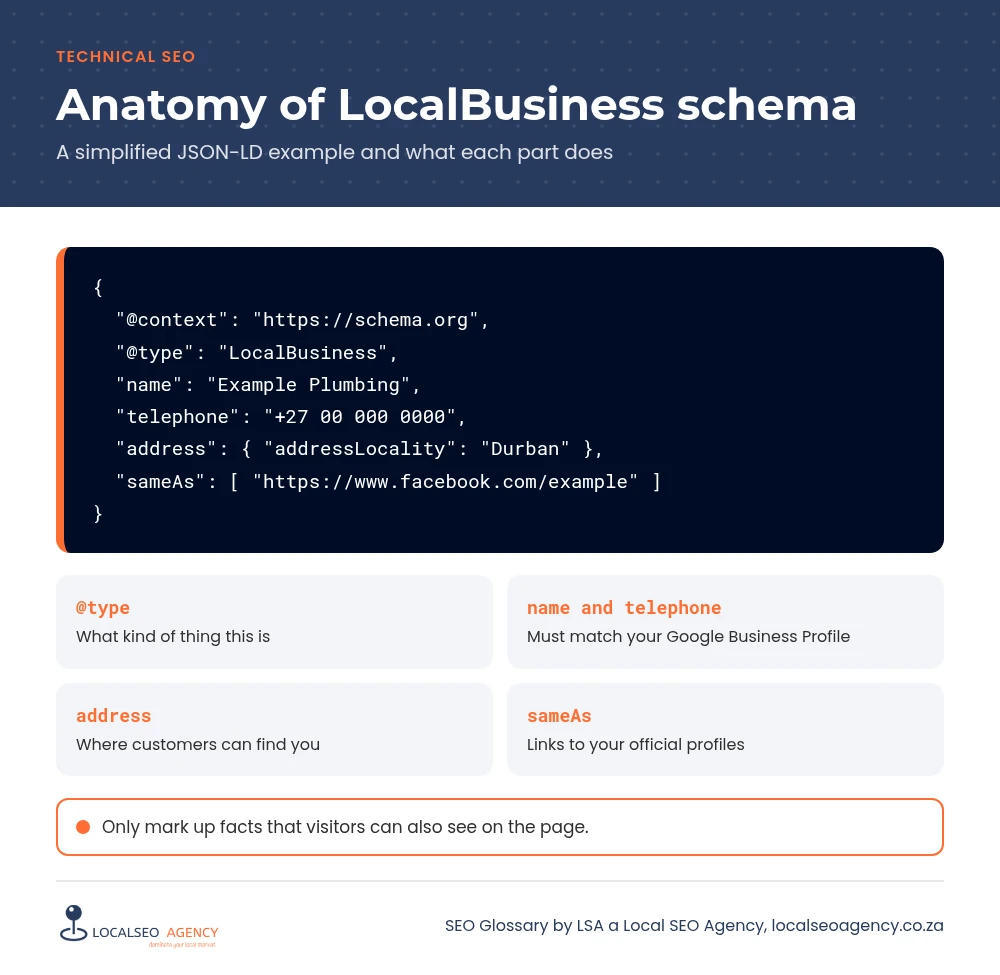
Structured data is code added to a page that describes its content in a standard format. The shared vocabulary is called schema.org, which is why it is also known as schema markup. Google recommends the JSON-LD format, a block of code in the page that lists facts such as the organisation's name, phone number, address, opening hours and social profiles, or the steps in a guide and the questions on an FAQ page.
Why it matters for local businesses
Structured data helps Google connect your website to your business as a real entity, and it makes your pages eligible for certain enhanced results, such as breadcrumbs, review snippets on some content types and event listings. It does not directly boost rankings, and eligibility is not a guarantee: Google decides when to show rich results and has narrowed some types over time.
Useful types for South African businesses
Organization or LocalBusiness
Your name, logo, contact details, address, hours and sameAs links to your social profiles. One clear, sitewide definition is better than several conflicting ones.
BreadcrumbList
Describes the page's place in your site, matching your visible breadcrumbs.
Service, Article and FAQPage
Describe service pages, blog posts and question and answer sections, as long as they match the visible content.
Common schema mistakes
- Marking up information that is not visible on the page.
- Adding review stars for your own business with ratings you wrote yourself.
- Two plugins outputting two different Organization definitions.
- Wrong or outdated phone numbers and addresses that conflict with your Google Business Profile.
- Invalid JSON, such as a missing comma, that breaks the whole block.
How to add and check it
On WordPress, an SEO plugin such as Rank Math outputs core Organization, website and page markup automatically. Fill in the business details carefully, then add page specific schema only where it adds something true and useful. Test pages with Google's Rich Results Test, which shows the types Google can use, and the Schema Markup Validator, which checks general validity. After launch, the Enhancements section in Search Console reports errors across the site.
Keep your business details in one place. When your phone number, address or hours change, update the Google Business Profile, the website footer and the schema settings on the same day. Mismatched details across these sources are one of the most common reasons local businesses send mixed signals to Google.
Treat schema as a description of what is already true on the page, never as a way to add claims that visitors cannot see.
How LSA helps
LSA a Local SEO Agency sets up clean, consistent schema that matches your Google Business Profile and visible content, with no inflated claims. It is part of our local SEO services and our technical work.
For the short definition, see Structured Data and Schema Markup in our SEO Glossary, alongside the other technical SEO terms.
Want Google to see your site the way your customers do? Call LSA a Local SEO Agency on 068 786 7331 or contact us for a technical check.