

TL;DR:
- South African online shoppers predominantly use search engines to find products, making SEO crucial.
- Optimizing keywords, site structure, and local signals enhances visibility and attracts local buyers.
- Technical SEO aspects like mobile-friendliness and fast load times significantly impact rankings and sales.
South African online shoppers are turning to search engines first when looking for products to buy. Online shopping is booming in South Africa, and most buyers start their purchase journey on Google before they ever land on a store. If your e-commerce store is not showing up in those search results, you are handing sales directly to your competitors. SEO, which stands for search engine optimization, is the process of making your store more visible in organic search results without paying for ads. In this guide, you will learn exactly how to optimize your South African e-commerce store, from keyword research and technical fixes to local SEO tactics that connect you with buyers in your area.
Table of Contents
- Understanding SEO fundamentals for e-commerce stores
- Keyword research and on-page optimization for product pages
- Technical SEO strategies to enhance store visibility
- Building authority with content marketing and link strategies
- Local SEO strategies to attract South African buyers
- Our take: What most e-commerce stores miss about SEO in South Africa
- Connect with expert SEO solutions for your South African e-commerce store
- Frequently asked questions
Key Takeaways
| Point | Details |
|---|---|
| SEO is essential | Optimizing your e-commerce store for search engines is key to attracting organic buyers in South Africa. |
| Keyword research matters | Careful selection and placement of keywords increase product visibility and attract the right audience. |
| Technical performance counts | Fast, mobile-friendly, secure sites rank higher and convert better. |
| Content drives authority | Quality content and earned backlinks grow your online reputation and position. |
| Local SEO is powerful | Focusing on local search tactics connects your store to nearby South African shoppers. |
Understanding SEO fundamentals for e-commerce stores
Now that we have set the stage for SEO’s importance, let’s unpack the foundational elements e-commerce owners need to understand.
At its core, SEO is about helping search engines understand what your store sells and matching your pages to what shoppers are searching for. Three pillars hold up every successful e-commerce SEO strategy: keywords, meta tags, and site structure. Keywords are the phrases your potential customers type into Google. Meta tags are the short snippets of text that tell search engines and users what each page is about. Site structure refers to how your pages are organized and linked together, making it easy for both shoppers and search engine bots to navigate.
E-commerce stores face unique SEO challenges that a simple blog or brochure website does not. The biggest one is duplicate content. When you sell the same product in multiple sizes or colors, it is tempting to copy the same description across all variants. Search engines penalize this. Category pages and brand pages also tend to be thin on content, which makes it harder for them to rank. E-commerce SEO increases organic visibility and drives sales, but only when these pitfalls are actively avoided.
It is also worth understanding the difference between organic traffic and paid traffic. Paid traffic comes from ads you pay for every time someone clicks. Organic traffic comes from unpaid search results. Organic visitors tend to convert better over time because they are actively searching for what you sell, not just responding to an ad. For South African store owners working with tighter budgets, e-commerce SEO in Cape Town and other major cities shows that organic traffic delivers a far better return on investment over the long run.
Here are the core SEO elements every e-commerce store owner in South Africa should prioritize:
- Keyword relevance: Match your product and category pages to the exact phrases South African buyers search for, including local terms and slang.
- Unique product descriptions: Write original copy for every product. Never use manufacturer descriptions word for word.
- Crawlable site structure: Ensure search engine bots can reach every important page within three clicks from your homepage.
- Meta titles and descriptions: Every product and category page needs a unique, descriptive meta title and meta description.
- Internal linking: Connect related products and categories so shoppers and bots move easily through your store.
Pro Tip: Use Google Search Console for free to see which pages Google has indexed and which ones have errors. Fix indexing issues first before investing in content or link building.
Keyword research and on-page optimization for product pages
With the basics covered, it is time to dive into strategic keyword selection and optimizing product pages for search results.
Effective keyword research boosts relevant traffic for South African e-commerce stores by connecting your pages to the exact language buyers use. The goal is not to chase high-volume global keywords. It is to find the specific phrases South African shoppers type when they are ready to buy.
Start with buyer intent keywords. These are phrases that signal someone is close to making a purchase. Words like “buy,” “price,” “cheap,” “best,” and “South Africa” or city names attached to a product are strong signals. For example, “buy leather boots online South Africa” is far more valuable than just “leather boots” because it tells you the searcher wants to purchase, not just browse.

Use tools like Google Keyword Planner, Ubersuggest, or Ahrefs to find keyword volume and competition data. Look for SEO keyword research opportunities where search volume is decent but competition is low. These are your fastest wins.
Here is a practical comparison of keyword types and their value for South African e-commerce:
| Keyword type | Example | Search intent | Conversion potential |
|---|---|---|---|
| Broad keyword | Running shoes | Informational | Low |
| Local keyword | Running shoes Cape Town | Navigational | Medium |
| Buyer keyword | Buy running shoes online SA | Transactional | High |
| Long-tail keyword | Best trail running shoes under R1000 | Transactional | Very high |
Once you have your keywords, apply them strategically across your product pages using this process:
- Title tag: Include your primary keyword near the beginning. Keep it under 60 characters.
- Meta description: Write a compelling 155-character summary that includes the keyword and a reason to click.
- H1 heading: Use the primary keyword naturally in the main product heading.
- Product description: Write at least 200-300 words of unique copy. Include the primary keyword and two or three related terms naturally.
- Image alt text: Describe every product image using relevant keywords. This helps with Google Image search too.
- URL slug: Keep URLs short, descriptive, and keyword-rich. Avoid auto-generated URLs with random numbers.
Pro Tip: Check your top competitor’s product pages using a free tool like MozBar. See which keywords they rank for and look for gaps where you can create better, more detailed content than they have.
Avoiding keyword stuffing is just as important as including keywords. Stuffing means forcing a keyword into your copy so many times it reads unnaturally. Google’s algorithm is sophisticated enough to detect this and will penalize your rankings. Write for people first, and search engines will follow.
Technical SEO strategies to enhance store visibility
Once your product pages are keyword-optimized, ensuring their visibility depends on solid technical SEO practices.
Technical SEO is the behind-the-scenes work that makes your store accessible, fast, and trustworthy to both users and search engines. Many South African e-commerce owners focus only on content and ignore technical issues, then wonder why their rankings stagnate.
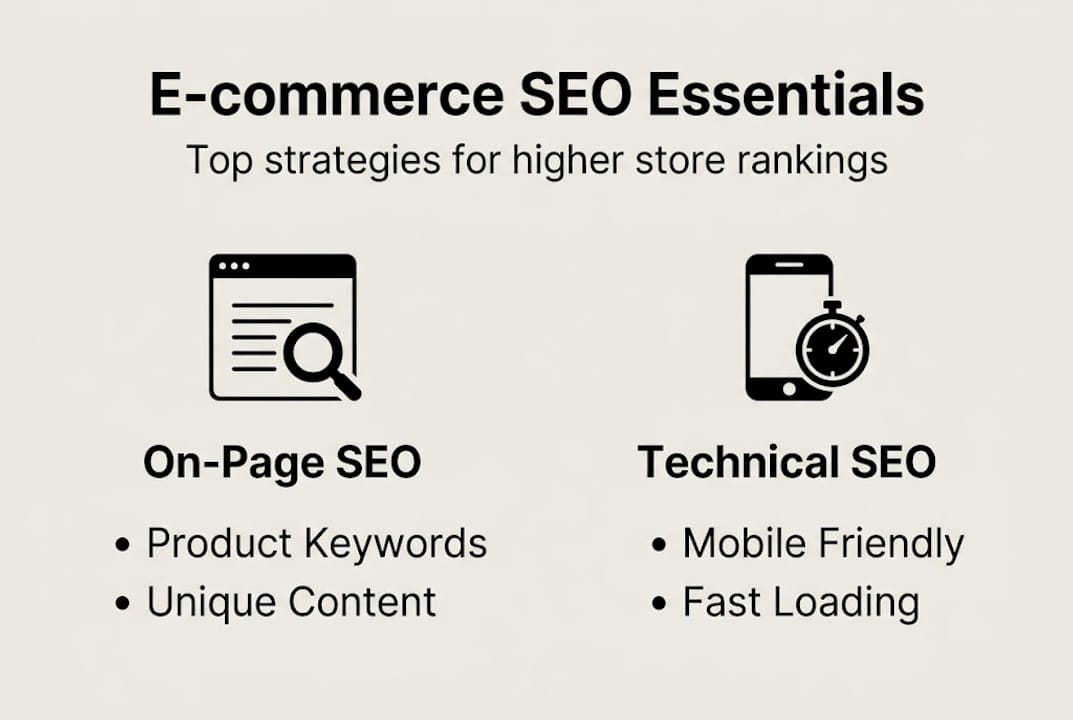
Mobile-friendliness and fast load times are essential for higher rankings. Google uses mobile-first indexing, meaning it primarily looks at your mobile site when deciding where to rank you. With a significant portion of South African shoppers browsing on smartphones, a slow or poorly formatted mobile store will lose rankings and sales simultaneously.
Here is a comparison of common technical SEO errors and their impact on your store:
| Technical issue | Impact on rankings | Impact on sales | Fix priority |
|---|---|---|---|
| Slow page speed | High negative impact | High cart abandonment | Urgent |
| No SSL certificate | Penalized by Google | Shoppers distrust site | Urgent |
| Broken links | Crawl errors, lost authority | Poor user experience | High |
| Missing meta tags | Lower click-through rates | Fewer visitors | High |
| Duplicate content | Keyword cannibalization | Diluted rankings | Medium |
| Unoptimized images | Slow load times | High bounce rate | Medium |
Key technical areas to address for your South African e-commerce store:
- SSL certificate: Your store must run on HTTPS. Google flags HTTP sites as “not secure,” and South African shoppers will abandon a checkout page that looks unsafe.
- Site speed: Compress images, enable browser caching, and use a reliable local hosting provider. Tools like Google PageSpeed Insights give you a free speed score and specific fixes.
- Mobile optimization: Test your store on multiple screen sizes. Buttons should be easy to tap, text should be readable without zooming, and checkout should be frictionless on mobile.
- XML sitemap: Submit a sitemap to Google Search Console so bots can find and index all your product and category pages efficiently.
- Canonical tags: Use canonical tags to tell Google which version of a page is the original, preventing duplicate content penalties from product variants.
For mobile indexing tips specific to South African stores, and for a deeper look at indexing techniques that prevent your pages from disappearing from search results, these resources cover the practical steps in detail.
A fast, secure, and mobile-friendly store is not just good for SEO. It builds trust with South African buyers who are increasingly cautious about online shopping security.
Building authority with content marketing and link strategies
After securing your store’s technical foundation, the next step is to build authority and trust in the eyes of both users and search engines.
Search engines rank pages they trust. Trust is built through two main signals: quality content that earns engagement, and backlinks from other reputable websites pointing to yours. Link building and content marketing substantially boost e-commerce visibility by signaling to Google that your store is a credible resource, not just another online shop.
Content marketing for e-commerce is not just about writing blog posts. It is about creating genuinely useful resources that your target audience wants to read and share. For a South African outdoor gear store, that might mean a guide to the best hiking trails in the Western Cape with recommended equipment. For a local beauty brand, it could be a tutorial on skincare routines suited to South African climate conditions. This kind of content attracts organic traffic, earns backlinks naturally, and positions your store as an authority.
Effective content marketing strategies for South African e-commerce stores include:
- Buying guides: Help shoppers make decisions. “How to choose the right solar panel for your South African home” attracts buyers at the research stage.
- Comparison articles: “Product A vs Product B” pages rank well and convert buyers who are nearly ready to purchase.
- Local content: Write about topics specific to South African cities, seasons, or events. This attracts local search traffic that global competitors cannot easily capture.
- Video content: Product demos and unboxing videos embedded on product pages increase time on page, which is a positive ranking signal.
- FAQs on product pages: Answer common questions buyers have. This can earn featured snippet placements in Google search results.
For backlinks, the most sustainable approach is earning them rather than buying them. Reach out to South African bloggers, news sites, and industry publications. Offer to write guest articles or provide expert commentary. Niche edit link building is another effective tactic where your link is placed within existing, already-indexed content on relevant websites.
“The best link you can earn is one from a site your customers already trust. In South Africa, that means local news sites, popular lifestyle blogs, and industry associations. One quality local link outweighs ten generic directory listings.” This principle holds true across every niche we have worked in.
Consistency matters more than volume. Publishing one genuinely useful piece of content per month and earning two or three quality backlinks beats publishing ten thin articles with no links every time.
Local SEO strategies to attract South African buyers
Authority matters, but in South Africa, local searches offer a powerful opportunity for e-commerce stores to tap nearby buyers.
Local SEO activities increase visibility for stores among nearby South African customers, even for online-only businesses. When someone searches “buy furniture online Johannesburg” or “best skincare store Durban,” Google shows results it believes are locally relevant. If your store is not optimized for local search, you miss these high-intent buyers entirely.
Start with Google Business Profile (formerly Google My Business). Even if you do not have a physical shop, you can create a profile for your e-commerce business. Fill in every field: business name, category, description, website URL, and service areas. Upload quality photos and keep your hours updated. A well-optimized profile can appear in Google’s local pack, which shows up above regular search results.
Here is a practical local SEO checklist for South African e-commerce stores:
- Claim and verify your Google Business Profile and choose the most accurate business category.
- List your store on local directories such as Brabys, Yellow Pages South Africa, and Hotfrog. Consistency in your business name, address, and phone number across all listings is critical.
- Encourage customer reviews on Google. Respond to every review, positive or negative. Reviews are a direct ranking factor for local search.
- Create locally relevant content on your website. Write about South African events, seasons, or regional needs that connect to your products.
- Use location-based keywords in your product and category pages where relevant. Phrases like “delivered across South Africa” or “Johannesburg same-day delivery” signal local relevance.
- Build citations from South African websites. A citation is any online mention of your business name and location, even without a link.
For a deeper dive into local SEO strategies tailored to South African businesses, or if you prefer to handle it yourself, these DIY local SEO tips walk you through the process step by step. You can also review SEO agency case studies to see what results are realistically achievable.
Pro Tip: Ask satisfied customers to leave a Google review immediately after their order is delivered. A simple follow-up email with a direct link to your review page makes it effortless for them, and reviews are one of the fastest ways to improve your local search visibility.
Our take: What most e-commerce stores miss about SEO in South Africa
Having explored practical strategies, let’s share a nuanced view shaped by experience in the local market.
The most common mistake we see South African e-commerce stores make is treating SEO as a global exercise. They optimize for broad English keywords, copy strategies from American or European blogs, and wonder why they are not ranking. The uncomfortable truth is that many SA e-commerce stores focus on global SEO signals while missing the local signals that actually move the needle here.
South Africa has a unique digital landscape. Shoppers search differently. They use local slang, reference specific cities and provinces, and trust local brands more than they once did. An e-commerce store that speaks directly to a Pretoria buyer, using language and references that feel local, will outperform a generic store every time, even if the generic store has more backlinks.
Another overlooked area is social signals. While Google has never officially confirmed that social media shares directly boost rankings, the indirect impact is real. Content that gets shared on platforms like Facebook, Instagram, and TikTok drives traffic, earns backlinks, and increases brand searches. All of these contribute to search visibility. Explore how social media SEO in SA works in practice and you will see the connection is stronger than most store owners realize.
The stores winning in South African e-commerce SEO right now are the ones doing the unglamorous work: writing genuinely local content, earning reviews, fixing technical issues, and building relationships with local publishers. There is no shortcut that replaces this foundation.
Connect with expert SEO solutions for your South African e-commerce store
Ready to take your SEO efforts to the next level? Getting the strategy right from the start saves months of wasted effort and lost sales.
At Local SEO Agency, we work specifically with South African businesses to build organic visibility that drives real revenue. Whether you need a full audit of your technical setup, a content strategy built around local buyer intent, or ongoing local SEO services that keep your store climbing the rankings, we have the expertise to deliver results. We also provide access to professional SEO tools that give you clear data on what is working and what needs attention. If you are ready to stop guessing and start growing, contact the SEO agency today for a consultation tailored to your store’s specific needs and goals.
Frequently asked questions
How long does it take to see SEO results for a South African e-commerce store?
Most stores begin seeing meaningful improvements within 3 to 6 months, though SEO results depend heavily on your starting point, competition level, and how consistently you implement changes.
Is local SEO necessary for an online-only store?
Absolutely. Local SEO increases visibility for e-commerce stores targeting South African buyers because many shoppers add city or region names to their searches, even when buying online.
What technical SEO issues most affect e-commerce rankings?
Mobile-friendliness and fast load times are the top technical factors, followed closely by indexing errors and missing or duplicate meta tags that prevent pages from ranking.
Can social media help my SEO?
Yes. Active social media drives traffic and brand searches, both of which contribute to search visibility. See how social channels contribute to rankings in the South African market specifically.
Should I update old product pages for SEO?
Refreshing old pages with updated keywords, fresh content, and better images can significantly lift rankings. Updating content improves rankings because Google favors pages that stay current and relevant to what buyers are searching for today.
Recommended
- Your Guide to Mastering SEO for E-Commerce in Cape Town – LSA SEO Agency
- Boost Conversions with an Ajax-Powered WooCommerce Mini Cart – LSA SEO Agency
- SEO and Website Speed – How They Affect Sales
- Local Listings Optimisation for Boosting SME Visibility
- Nectar Blog | Amazon SEO Best Practices 2025 for Maximizing Visibility